

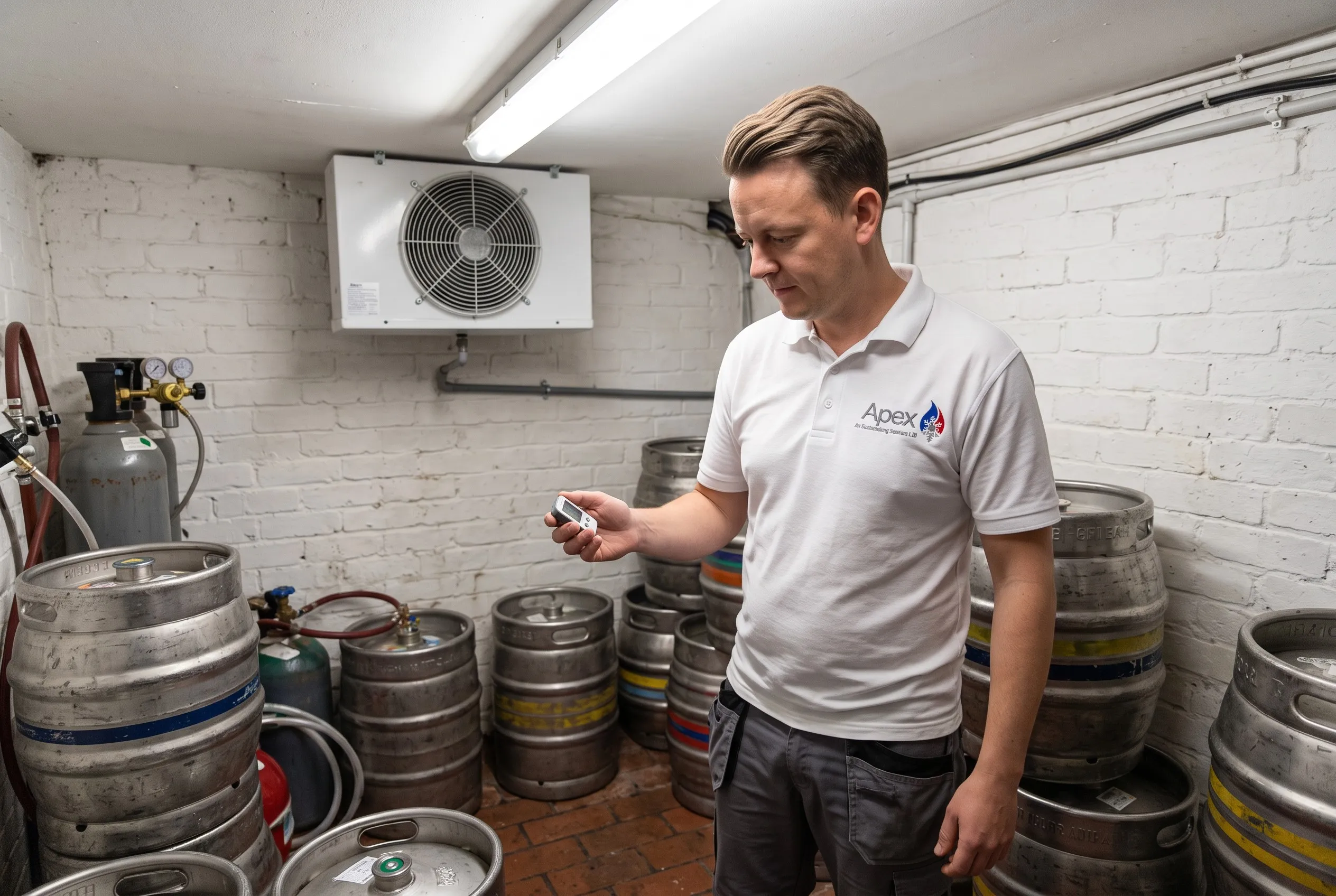
The short answerA beer cellar should be kept between 11°C and 13°C, all year round, day and night. Brewers recommend that range, and Cask Marque allows a tolerance of 1°C either side when it scores a pub. Too warm and beer fobs (pours as foam) and goes off faster. Too cold and cask ale won't condition properly, so it can pour flat and develop a chill haze.
Questions about your own home? Olly answers them himself.
The right beer cellar temperature is 11 to 13°C, held steady all year. This guide is for pub, bar and club owners and cellar managers in Kent, London and the South East. It explains why that range matters, what goes wrong either side of it, how a cellar cooler holds it, and what to do when it can’t.
What temperature should a beer cellar be?
Keep the cellar between 11°C and 13°C, and aim for about 12°C. Cask Marque’s cellar card says cellar cooling should hold 11 to 13°C. It also says brewers recommend that range and it allows a tolerance of 1°C either side when scoring a pub. Brewers such as Adnams give the same figure to their trade customers.
It is a whole-cellar, all-day target. The beer at the back of the stack matters as much as the air at the cooler.
Why 11 to 13°C matters for cask ale
Cask ale finishes its life in your cellar. Once the cask is vented, the live yeast eats the last of the sugars, builds flavour and gives the beer its natural fizz. That secondary fermentation works best between 11 and 13°C. Adnams advises getting casks to that temperature after delivery and tapping them 24 to 36 hours before serving, so the sediment settles.
Keg beer is chilled again on its way to the bar, but a cellar in range still keeps it in better condition and means the line coolers don’t have to work so hard.
What happens if a beer cellar is too warm?
- Fobbing. Beer pours as foam, so you waste product and serve slowly. A cellar-services engineer quoted in SLTN put it plainly: too warm, and the cellar is likely to deliver fobbing beer.
- Faster spoiling. Cask ale goes off quicker and can taste flat or sour.
- Slow recovery. Warm stock takes a long time to bring back down, so a cooler fault costs you days of quality, not hours.
Cask Marque said in 2014 that 90 per cent of the pubs that fail its assessment do so on temperature, often despite having cooling equipment already installed. Owning the kit is not enough. It has to be working and set up right.
What happens if a beer cellar is too cold?
- Cask ale won’t condition properly, so it can pour flat.
- It can develop a chill haze, a cloudiness that puts customers off.
- Over-cooling also wastes electricity for no benefit.
Cellar temperature vs serving temperature
These are two different jobs done by two different bits of kit. The cellar cooler holds the room at 11 to 13°C. Line or python coolers chill the beer on its way to the tap, down to serving temperature for lagers and extra-cold products. Line coolers are often looked after by the brewery. Who looks after the cellar cooler depends on your lease or tenancy, so check if you’re not sure.
How does a cellar cooler work?
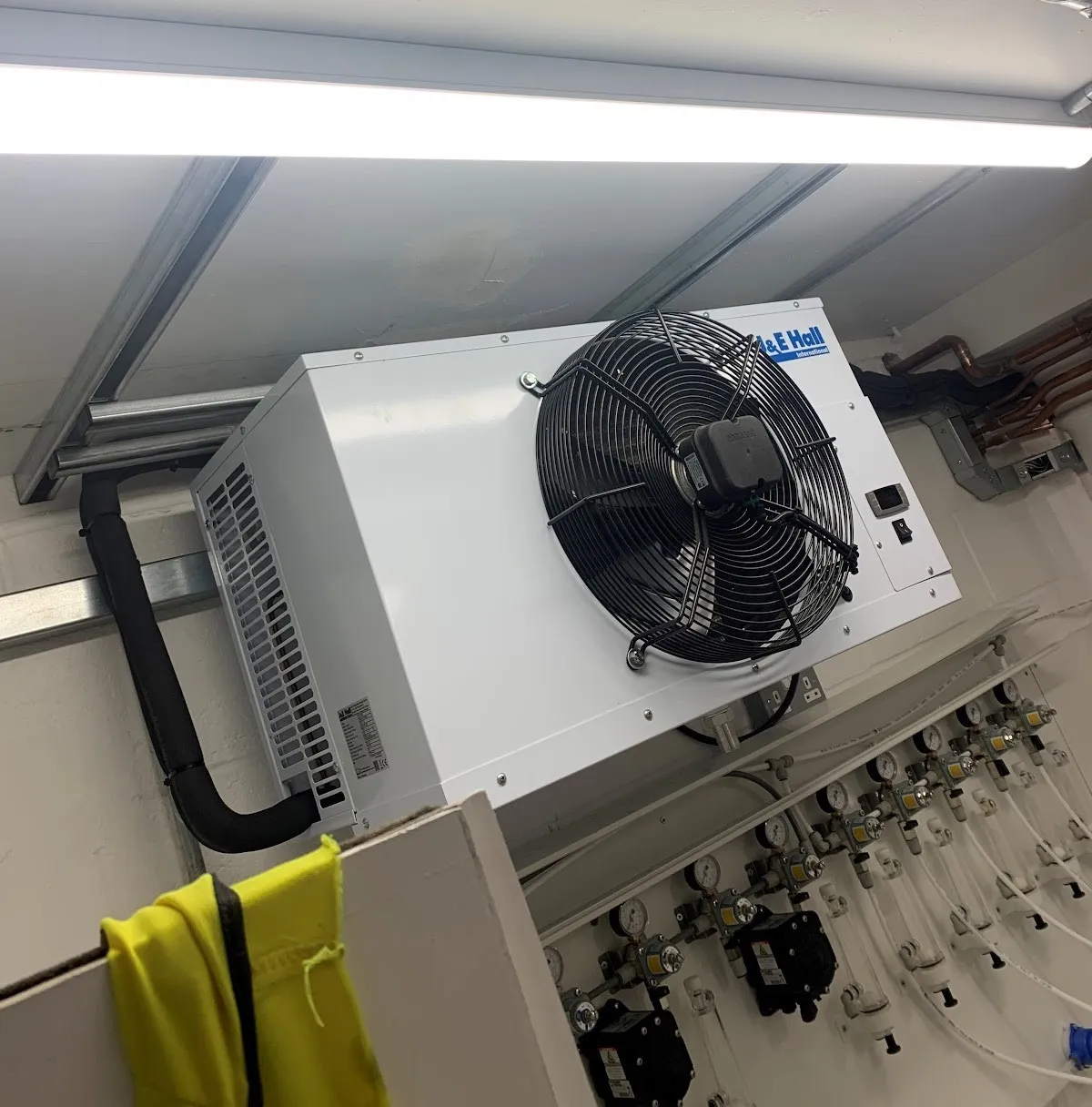
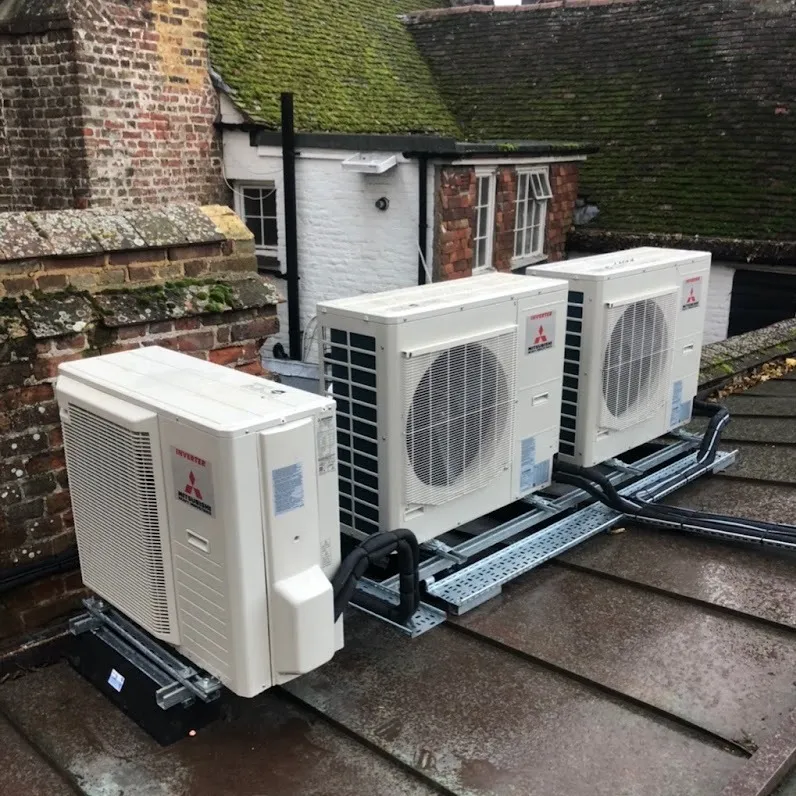
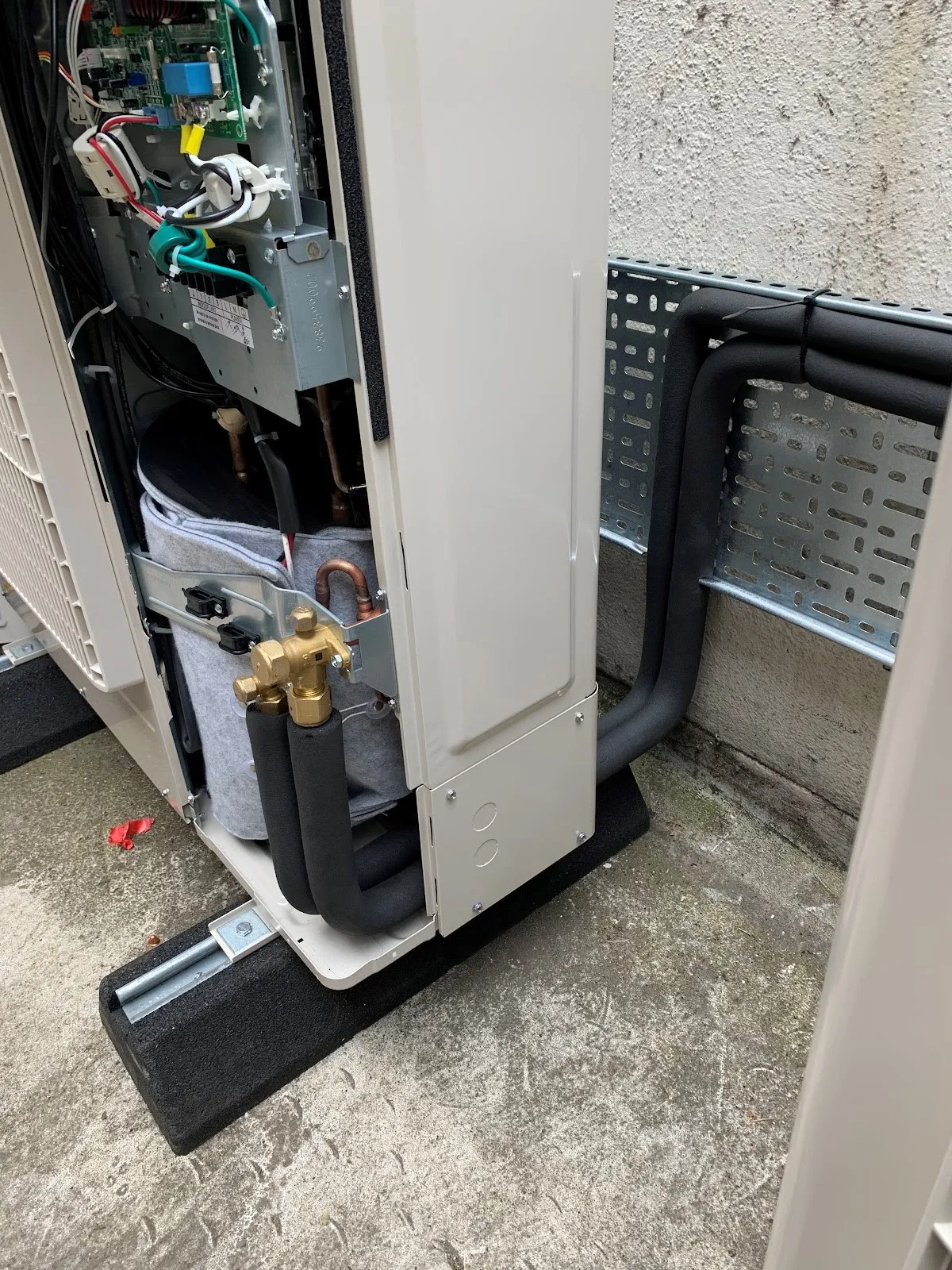
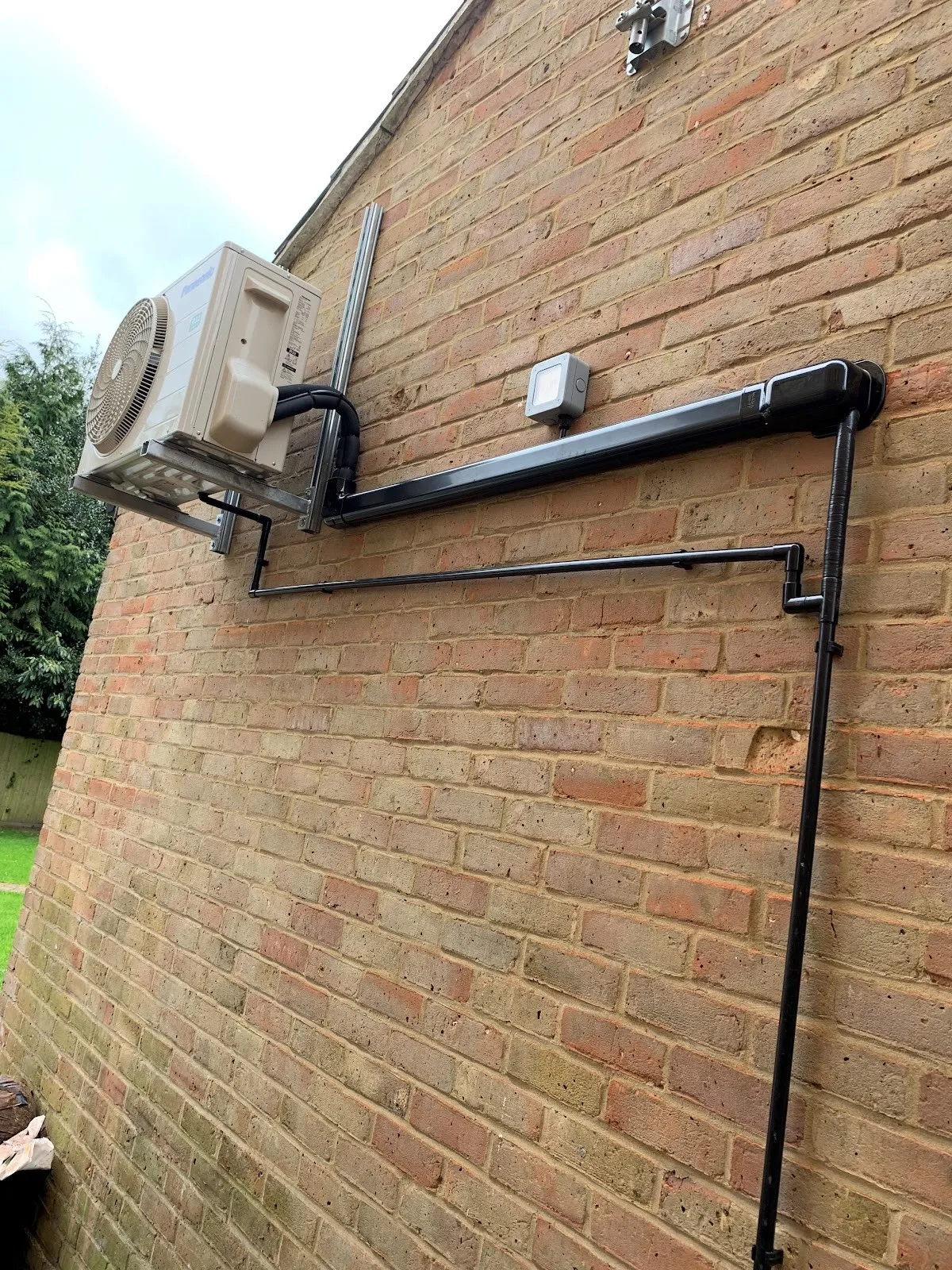
A cellar cooler is a refrigeration system built for a cool, damp room. An indoor unit on the cellar wall or ceiling blows air across a cold coil, which takes heat out of the room. The refrigerant carries that heat to a condensing unit outside, which gets rid of it to the open air. A controller switches the system on and off to hold the temperature you set, and runs short defrost cycles to clear ice from the coil.
Because the outdoor unit does the heavy lifting, anything that stops it breathing, such as boxes stacked against it or a sheet thrown over it, makes the whole system struggle.
What size cellar cooler do I need?
There is no one-size answer, which is why online cellar cooling calculators only give a rough guide. The cooler has to remove all the heat that gets into the cellar, so the size depends on:
- The size of the cellar and how well its walls, ceiling and door are insulated.
- Heat from other kit in the cellar, such as line coolers, ice machines or glass washers.
- How often the door opens, and whether there is a hatch or lift to the street.
- How much stock arrives warm, and how quickly it needs to come down to temperature.
- Where the outdoor unit sits, and how hot that spot gets in summer.
A cooler that is too small runs flat out on a hot day and still loses ground. One that is too big switches on and off and controls the temperature less evenly. We size each cellar on site before quoting.
How to keep a beer cellar cool
- Keep the cooler running all the time, including at night.
- Keep the cellar door shut. Fit a strip curtain or a self-closing door if it is often open for deliveries.
- Keep the indoor unit clear. Stock stacked in front of it blocks the airflow, so the cooler runs longer and can ice up.
- Keep the outdoor unit clear. Don’t cover it, block it or store crates against it.
- Don’t set it too low. Aim for about 12°C. Lower costs more and does the ale no good.
- Check and log the temperature every day at stock height.
- Book regular servicing, plus the leak checks the law requires for many cellar systems.
Signs your cellar cooler needs attention
- The cellar is drifting above 13°C, or the display and your thermometer disagree.
- Beer is fobbing at the bar.
- Ice is building on the indoor coil, or water is dripping from it.
- The outdoor unit is running constantly, tripping out or making new noises.
- The cooler runs but the air coming off it isn’t cold.
Any of these is worth a call before a hot weekend. Our cellar cooling page covers repairs, servicing and replacements, and you can WhatsApp Olly a photo of the cooler and its controller display.
Do cellar coolers need F-gas leak checks?
Many do. The law sets leak checks by the climate impact of the gas in the system, measured in tonnes of CO2 equivalent. A system holding 5 tonnes or more needs a check at least every 12 months by an F-gas certified company, with records kept by the operator, which is the pub.
| Refrigerant | Global warming potential | Gas that reaches 5 tonnes CO2e |
|---|---|---|
| R404A (common in older cellar coolers) | 3,922 | about 1.27kg |
| R134a | 1,430 | about 3.5kg |
So many older R404A coolers are in scope. The refrigerant and the charge are printed on the label of the outdoor unit. Apex is an F-gas certified company (REFCOM REF1017376). We carry out the checks and give you the records you need to keep. For bigger sites with air conditioning as well, see commercial air conditioning and our servicing page.
Photos of the rooms and the outside walls get you a first idea, then a free survey.