

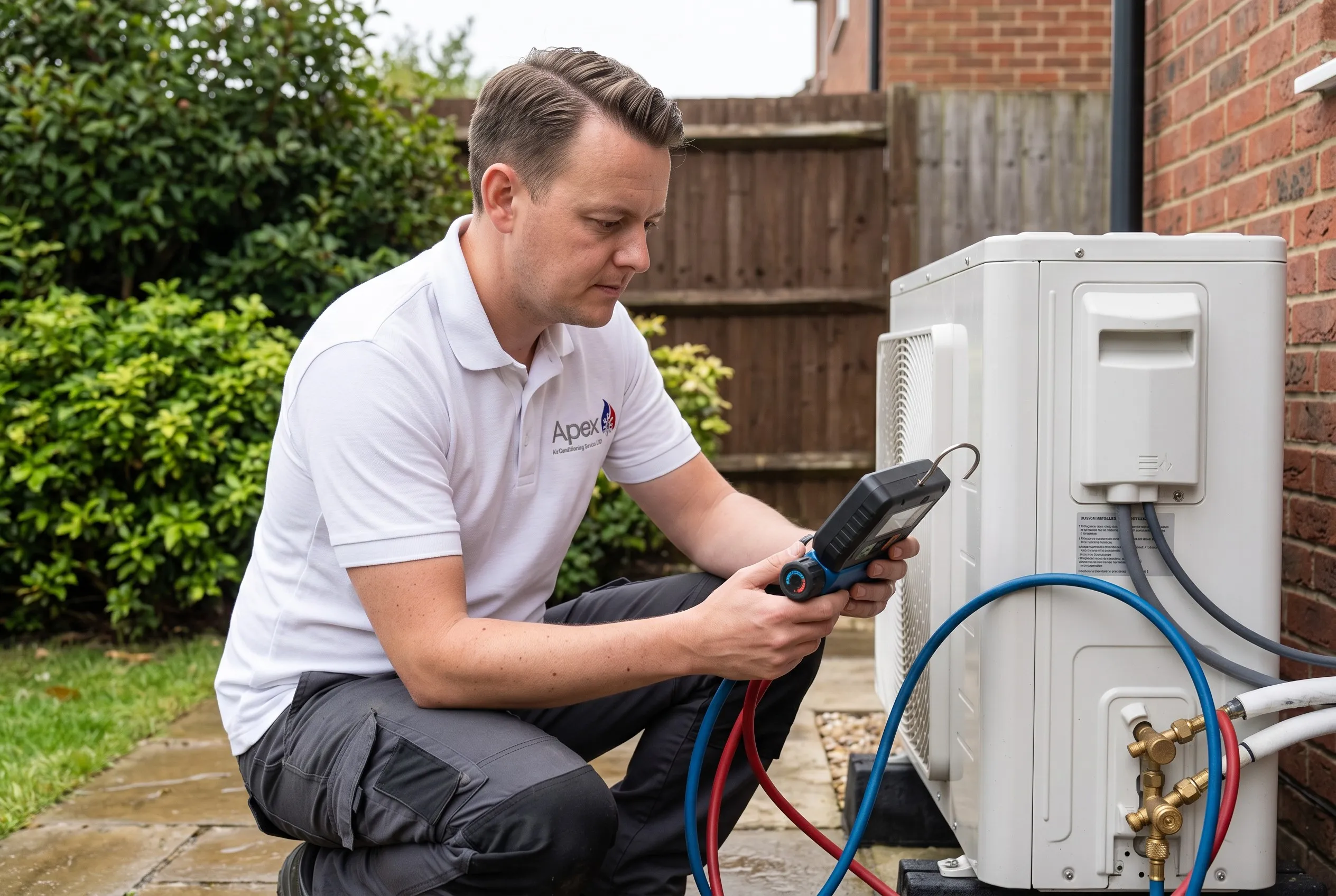
The short answerRepair it if it's under about ten years old, runs on R32 and the fault is a part such as a fan, sensor, board or drain. Think about replacing if it runs on R22, needs a compressor, keeps losing gas, or is an older R410A system facing a big repair. R22 can't be used for servicing, and R410A supply falls again on 1 January 2027.
Questions about your own home? Olly answers them himself.
Should you repair or replace your air conditioning? It comes down to three things: how old the system is, which refrigerant it runs on, and how big the fault is. This guide is for homes and businesses with an older system that has stopped cooling, started leaking or begun to struggle. We first wrote about upgrading older systems in 2023. This is the updated version, with the refrigerant rules as they stand in October 2026.
Should I repair or replace my air conditioner?
Use this as a starting point. The right answer for your system depends on the fault, which we find before we price anything.
| Your situation | Usually |
|---|---|
| Under about ten years old, R32 or R410A, a part has failed (fan, sensor, board, drain) | Repair |
| Any age, serviced, small fault, otherwise working well | Repair |
| Runs on R22 and has a refrigerant fault | Replace |
| Compressor failed on an older system | Replace, in most cases |
| Keeps losing refrigerant, leak hard to find or reach | Replace, in most cases |
| Older R410A system facing a big repair | Get both prices, then decide |
| Never the right size for the room, always noisy or struggling | Replace with a correctly sized unit |
How long does air conditioning last?
A well-installed, serviced split system lasts a long time. Daikin says a well-serviced heat pump can run efficiently for 15 to 20 years, while neglected systems often fail early. Air conditioning that heats and cools is a heat pump, so the same logic applies.
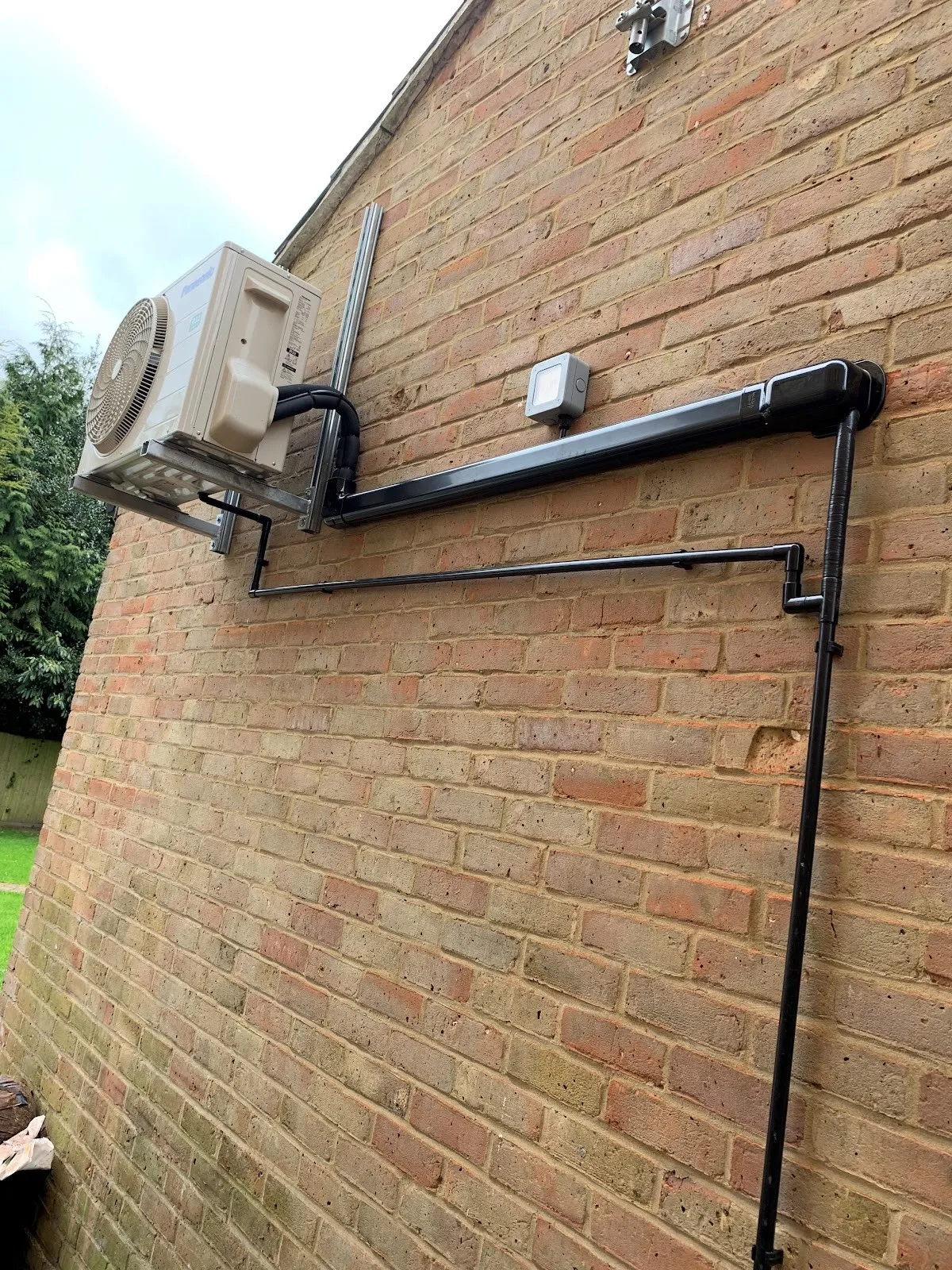
How long yours lasts depends on how well it was sized and fitted, how hard it works, whether it is serviced every year, and where the outdoor unit sits. An outdoor unit boxed in where it can’t breathe works harder every day.
Signs a system is near the end:
- It needs repairs more and more often.
- It no longer reaches the temperature you set on a hot day.
- It is noisier than it used to be, inside or out.
- It has lost refrigerant more than once.
- Your electricity use has crept up with no other reason.
Check the refrigerant first
The refrigerant is printed on the label of the outdoor unit. It changes the sums more than anything else.
| Refrigerant | Where it’s found | Can it be repaired? |
|---|---|---|
| R22 | The oldest systems still running | Not if the gas circuit is involved. Recycled R22 for servicing ended on 31 December 2014 |
| R410A | Most systems from before R32 took over | Yes. But no new single splits under 3kg on it since 2025, and supply falls again on 1 January 2027 |
| R32 | Most new split systems | Yes. It has about a third of R410A’s warming effect and is allowed in new single splits |
| R290 (propane) | Some new models | Yes, by engineers trained for flammable refrigerants |
What is happening to R410A?
R410A is still legal to use, service and repair in Great Britain. Two things are changing around it. Since 2025, new single split systems holding under 3kg of refrigerant can’t use gases with a warming potential of 750 or more, which rules out R410A. And the total supply of these gases (HFCs) is being cut in stages. FETA, the trade body, reports that the GB quota falls from 31 to 24 per cent of the baseline on 1 January 2027, a 22.6 per cent drop in availability, and to 21 per cent in 2030.
Less gas usually means dearer gas. That doesn’t make an R410A system worthless, but it tips the balance towards replacing when a big refrigerant repair comes up on an older unit.
When a repair makes sense
- The system is less than about ten years old.
- It runs on R32, or R410A with no refrigerant fault.
- The fault is a part: a fan motor, a sensor, a circuit board, a blocked drain or a condensate pump.
- It has been serviced and otherwise works well.
- It was the right size for the room in the first place.
Leaking water, a smell or a unit that has stopped cooling often turn out to be simple. Our air conditioning repairs page lists the common faults and what usually causes them.
When replacing usually makes more sense
- It runs on R22 and has a refrigerant fault.
- It needs a compressor or another big repair, and it’s not young.
- It keeps losing refrigerant and the leak is hard to find or reach.
- It’s an older R410A system facing a big refrigerant repair.
- It was never the right size for the room, so it has always struggled or been noisy.
Is a regas worth it?
Not on its own. Refrigerant doesn’t get used up. If a system is low, it has a leak. GOV.UK guidance on F-gas leak checks says that when a leak is found it must be repaired as soon as possible, and the system re-tested within a month to check the repair worked. Topping up without fixing the leak just pays for gas that escapes again.
A proper refrigerant repair means finding the leak, fixing it, pressure testing, then recharging by weight. If the leak is in a hard-to-reach coil on an older R410A unit, that is often the point to price a replacement too.
What you gain from a newer system
- Lower running costs. Modern inverter units hold the temperature with far less power than older on/off units. The current energy label goes up to A+++, which for cooling means a seasonal efficiency (SEER) of 8.5 or more. Our running costs guide shows what that means in pence.
- Efficient heating in winter, at a fraction of the cost of plug-in heaters.
- Quieter running, inside and out.
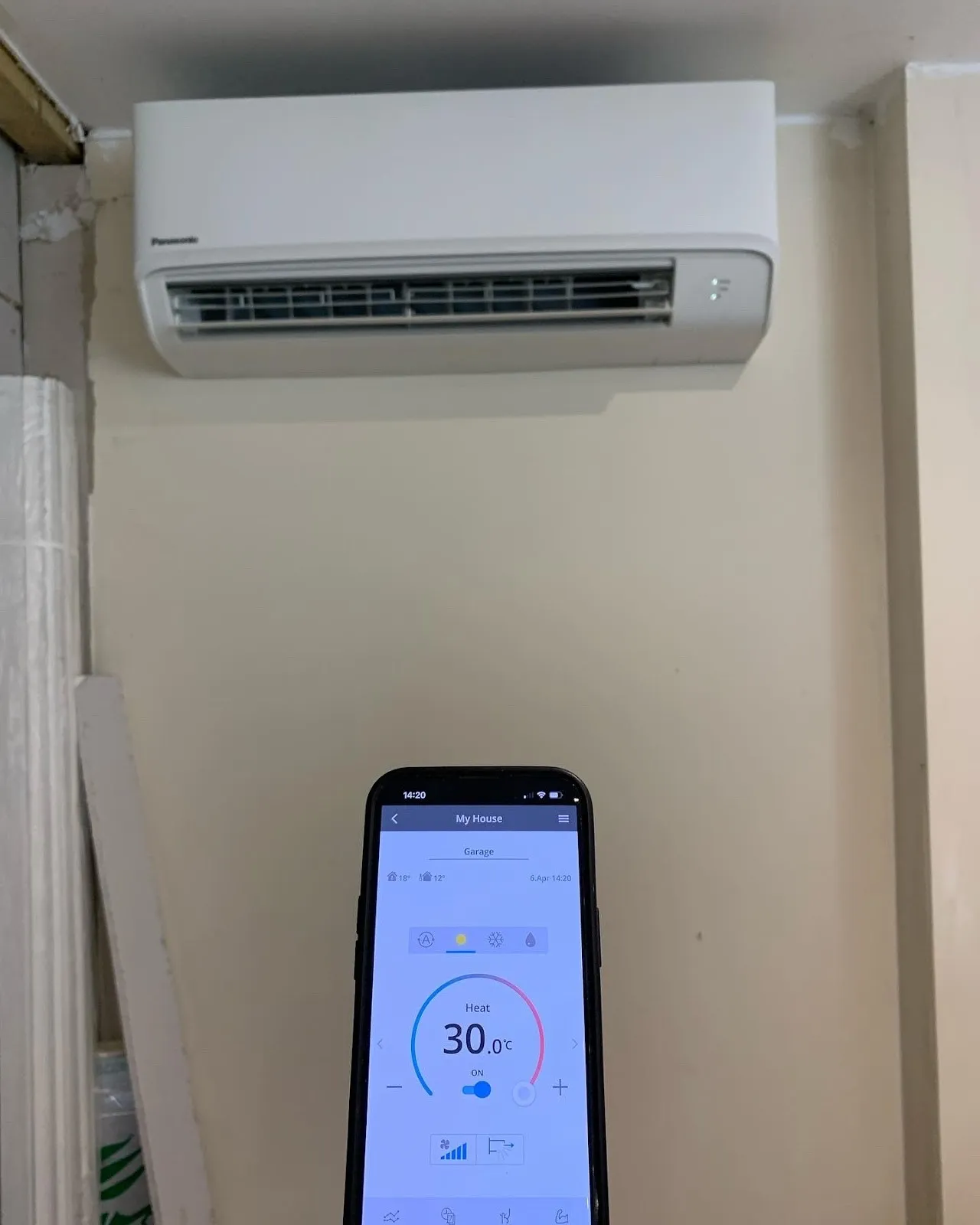
- Better control, from Wi-Fi and smartphone apps to zoning.
- A new manufacturer warranty, kept valid with a yearly service.
If you do replace, our guide to what air conditioning costs to fit gives the published UK price ranges.
How we help you decide
When we find a fault, we tell you what it is, what the repair would cost, and roughly what a replacement would cost, so you can decide with the facts in front of you. If replacing makes more sense, we size the new system properly and handle the safe recovery of the old refrigerant. Start with a repair visit, read about our air conditioning installation, or send Olly a photo of the unit and its label.
Photos of the rooms and the outside walls get you a first idea, then a free survey.