

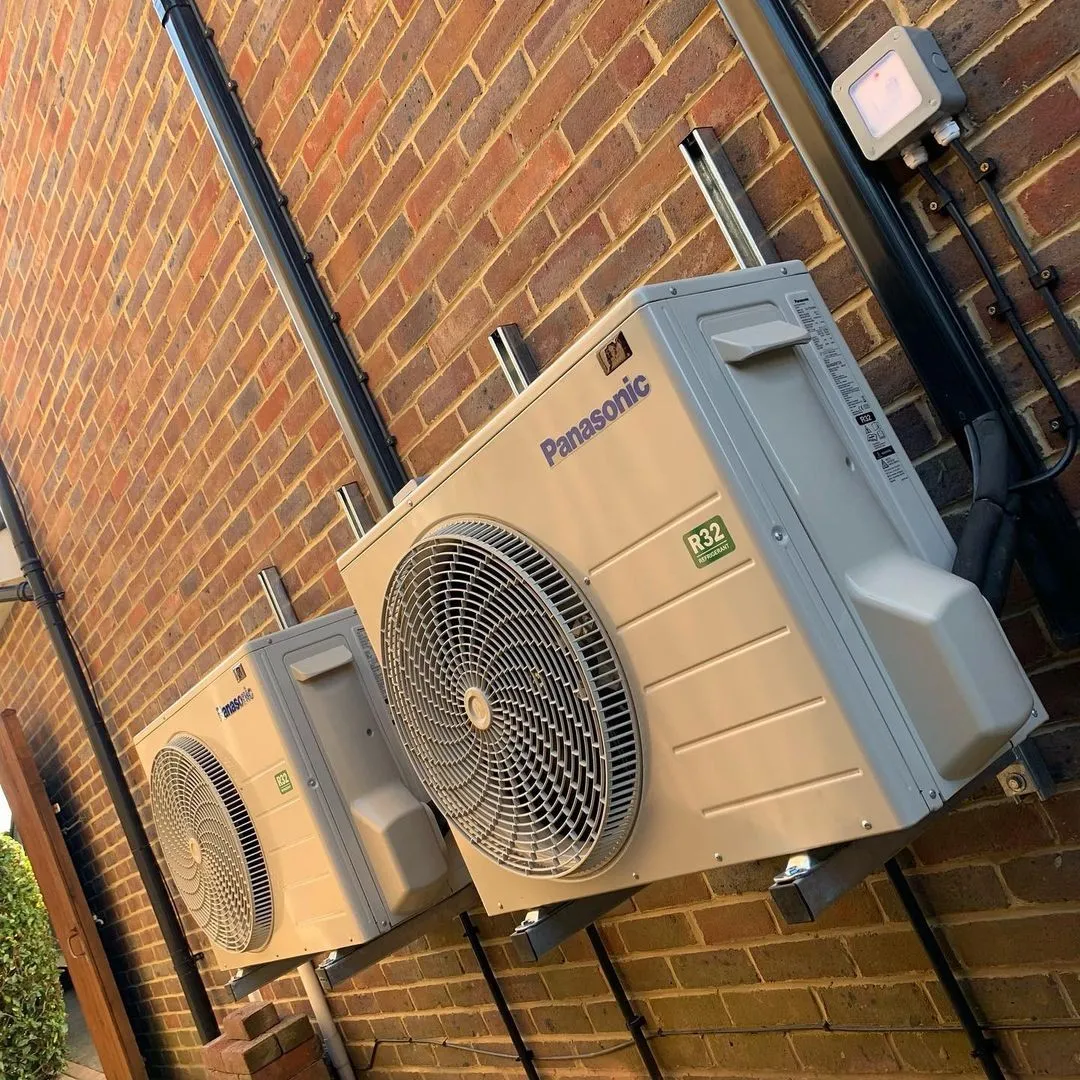
The short answerA single split is one indoor unit on its own outdoor unit. A multi split runs two or more indoor units from one shared outdoor unit. For one room, a single split is simpler and usually cheaper. For several rooms, a multi split saves wall space and outdoor units, and on a semi or terrace it is often the only way to stay within the one-outdoor-unit planning limit.
Questions about your own home? Olly answers them himself.
Single split vs multi split is the first big choice when you want air conditioning in more than one room. This guide explains both in plain terms, with published UK prices, the planning rules that often decide it, and real examples from homes we have fitted in Kent and south-east London. Both types heat as well as cool.
What is a single split system?
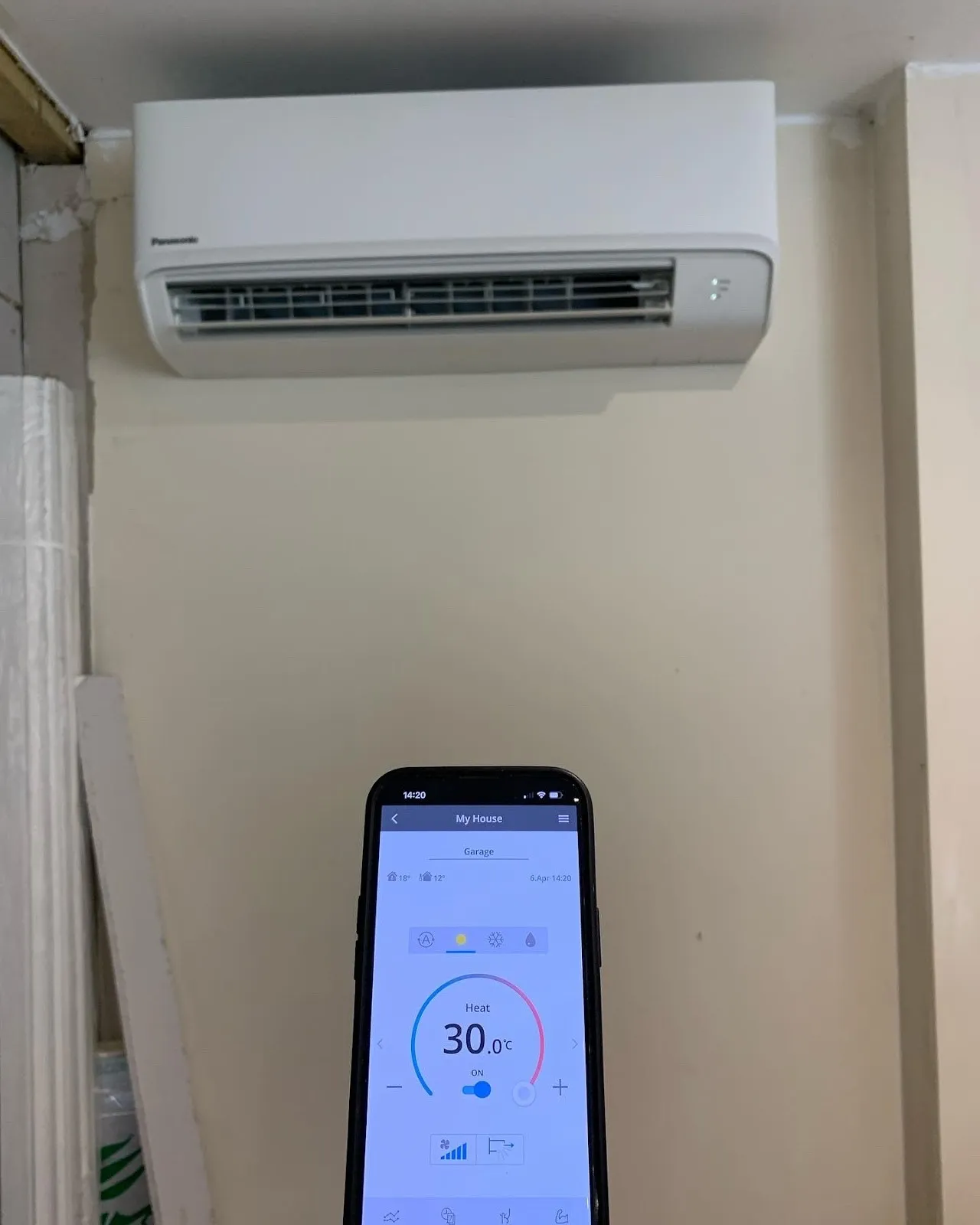
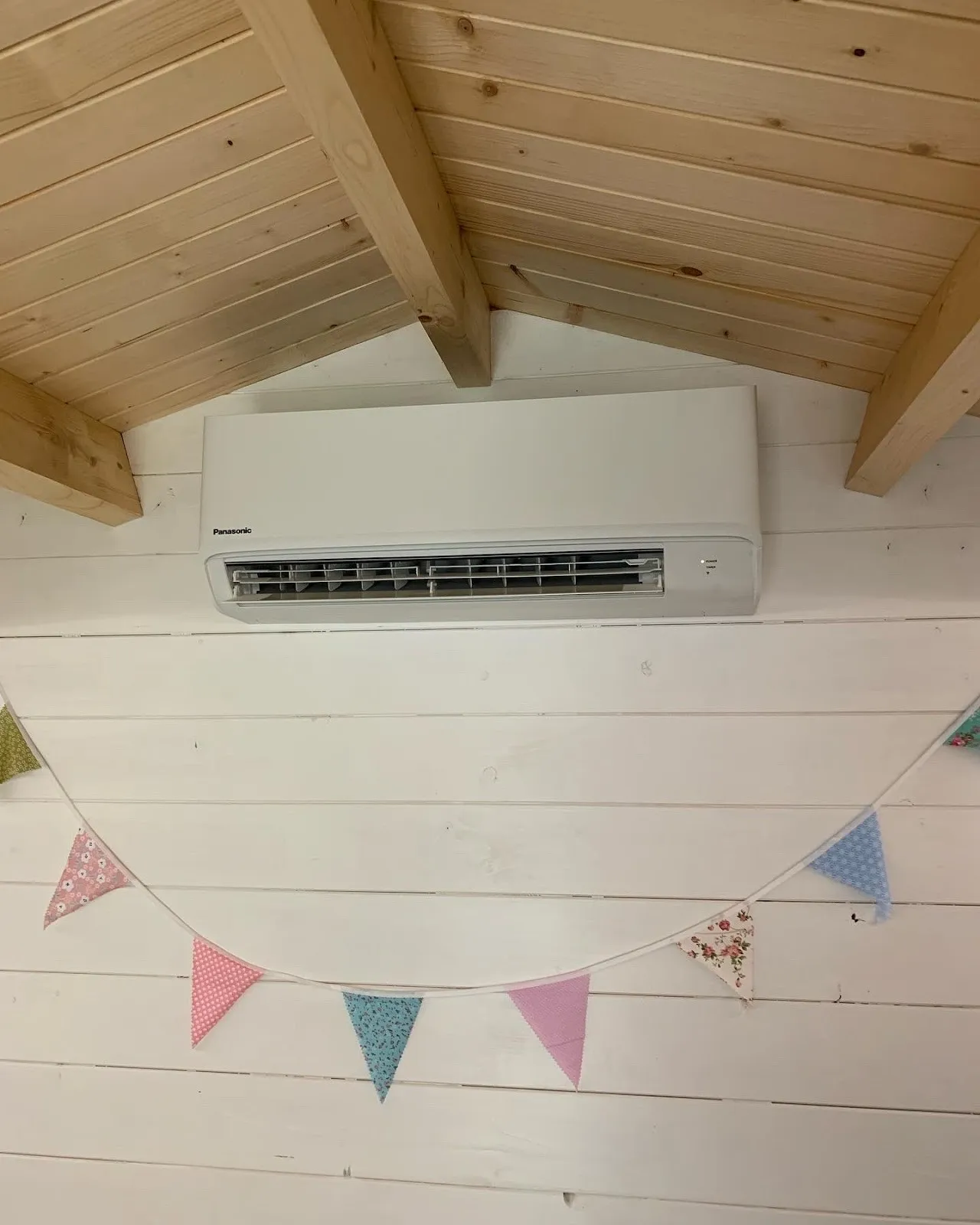
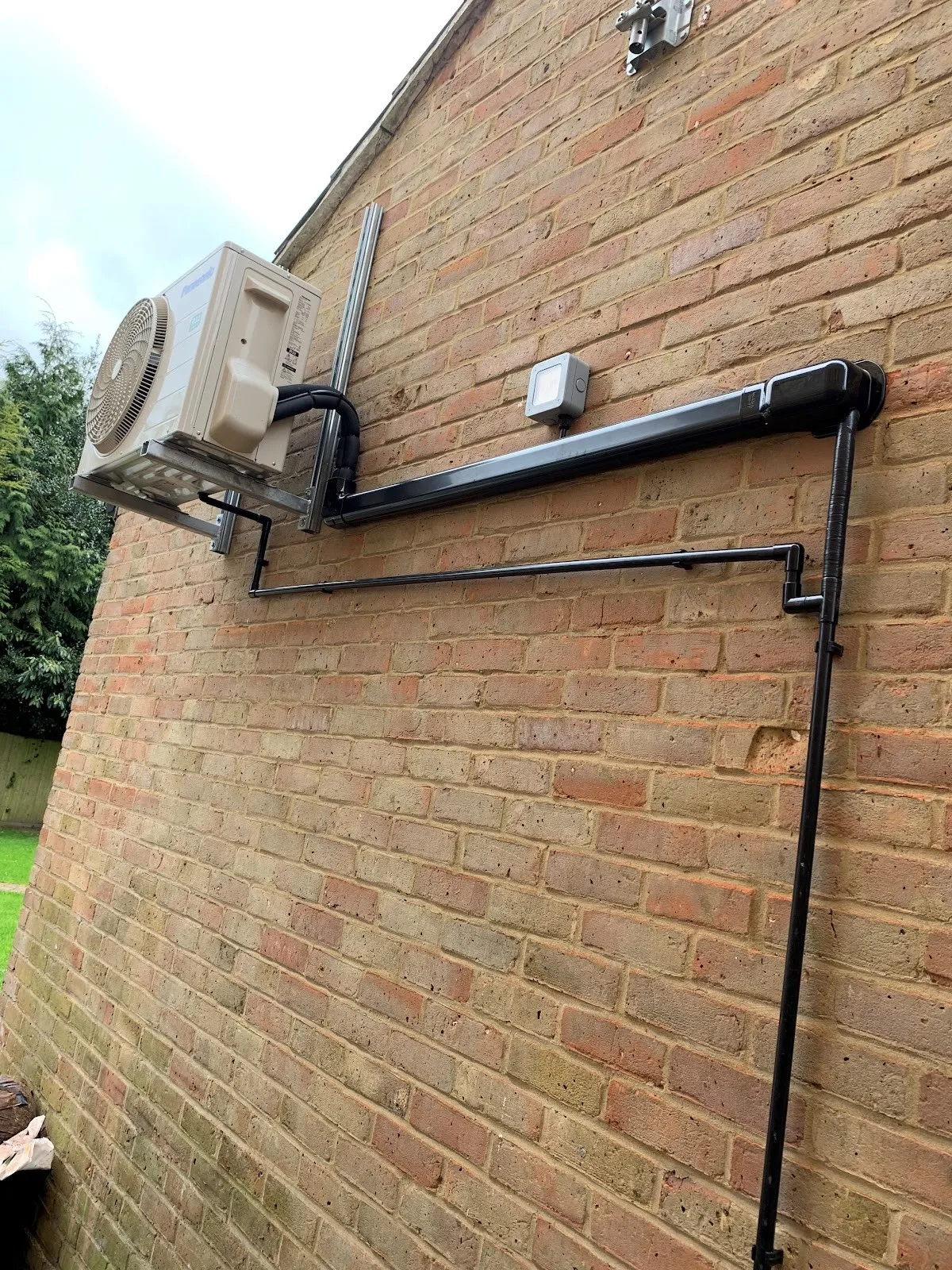
A single split is one indoor unit connected to its own outdoor unit by a pair of refrigerant pipes, a cable and a drain. One room, one system. It is the most common way to air condition a bedroom, a home office or a garden room. For example, we fitted a 3.5kW Panasonic wall unit for a garden room in South Darenth.
What is multi split air conditioning?
A multi split uses one larger outdoor unit to run two or more indoor units, each in its own room. Every indoor unit has its own pipes back to the outdoor unit, its own remote or app control, and its own temperature setting. Examples from our own jobs:
- A Daikin three-unit multi system with Madoka smart controls for a house in Sevenoaks.
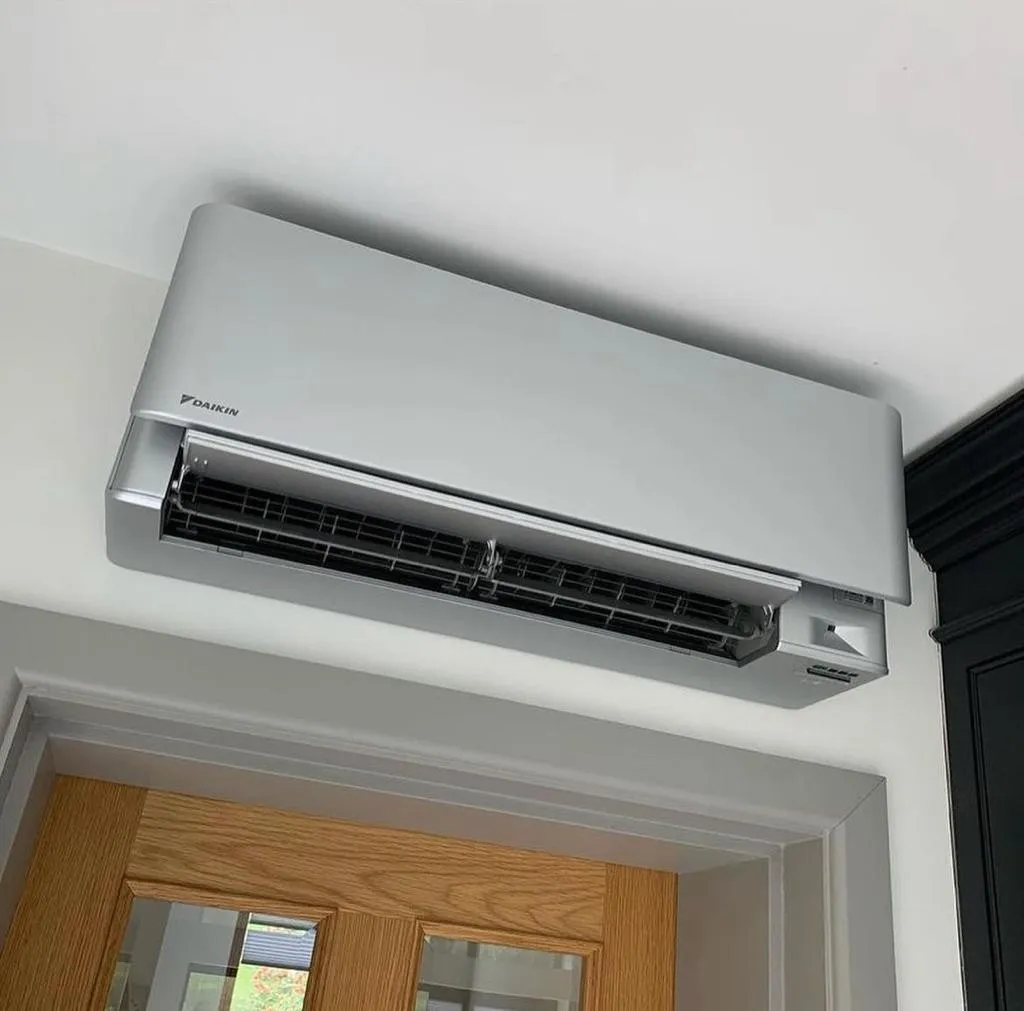
- A Panasonic multi split with Etherea wall units, finished in graphite grey, for a home in Dartford.
- A Mitsubishi Heavy Industries 12kW multi split serving six wall units, plus a separate 7kW kitchen system, for a home in Welling.
Single split vs multi split at a glance
| Feature | Single split | Multi split |
|---|---|---|
| Outdoor units | One per room | One for several rooms |
| Best for | One or two rooms, or rooms far apart | Three or more rooms close together |
| Planning on a semi or terrace | Only one outdoor unit allowed without an application | One outdoor unit can serve every room |
| If the outdoor unit fails | Only that room is affected | Every room on it stops |
| Heating in one room, cooling in another | Yes, each system is independent | Usually no, all rooms run in the same mode |
| Adding a room later | Add another system (if planning allows) | Only if the outdoor unit has a spare connection and capacity |
| Efficiency | Each unit sized exactly for its room | Depends on the combination, check its rating |
Which costs less: single split or multi split?
For one room, a single split. Selectra’s October 2026 figures put one room at about £1,500 to £3,000 fitted, two rooms on a multi split at about £3,200 to £4,500, and three to four rooms at about £4,000 to £8,000. Which? quoted about £1,900 for one room and about £3,700 for a multi-unit system in a three-bedroom semi in July 2026.
For two rooms, the totals can be close, and the choice often comes down to outdoor space and planning. From three rooms up, one multi split outdoor unit usually beats three separate outdoor units on cost, wall space and looks. Our air conditioning cost guide goes through everything that moves the price.
How do planning rules affect the choice?
They often decide it. Under the permitted development rules for England, you can fit only one outdoor unit on a semi-detached or terraced house without a planning application, and two on a detached house. The outdoor unit can be up to 1.5 cubic metres, and it must pass the MCS 020(a) noise calculation and heat as well as cool.
So on a semi or terrace, if you want three bedrooms done, a multi split is usually the way to do it without applying for permission. On a detached house you have more choice. Some homes suit two separate systems, like the two Mitsubishi Electric 7kW split systems we fitted for a home in Fawkham. Our planning permission guide has the full list of conditions.
What happens if the outdoor unit fails?
On a multi split, every room on that system loses heating and cooling until it is fixed. On single splits, only one room is affected. For most homes that is an acceptable trade, because outdoor units are reliable when they are serviced. If one room really can’t be without cooling, such as a server cupboard or a home office you depend on, give it its own single split.
Can each room have its own temperature?
Yes. On both types, every indoor unit has its own setting, so a bedroom can sit at 20°C while the living room is at 23°C. The difference is the mode. On most domestic multi splits, all the indoor units must be in the same mode at the same time: all heating or all cooling. That rarely matters in a home, but in a building with a sunny south side and a cold north side it can.
Running costs and efficiency
Neither type is always cheaper to run. Every single split, and every multi split combination, has its own seasonal efficiency rating on the energy label: SEER for cooling and SCOP for heating. An A++ rating means a SEER of at least 6.1 for cooling and a SCOP of at least 4.6 for heating.
A multi split is most efficient when it is running several rooms at once. Running one small room on a big outdoor unit can be less efficient than a single split sized for that room. If you will mostly cool one room at a time, that is a point in favour of separate systems. See air conditioning running costs for what the ratings mean in pence.
Can I add another room later?
On a single split, you add another system, as long as planning allows another outdoor unit. On a multi split, only if the outdoor unit has a spare connection and enough capacity. If you think you might add a room in a year or two, tell us at the survey. We can choose an outdoor unit with a spare port and room to grow, which costs far less than replacing it later.
Which indoor units can you use?
Both types can use wall-mounted, floor-mounted, cassette and slim ducted indoor units. On many multi split ranges you can mix them on one outdoor unit, within the maker’s limits. That suits homes where a loft with low eaves needs a floor unit and the bedrooms suit wall units.
What about ducted air conditioning?
Ducted air conditioning is a third option for several rooms. One hidden indoor unit in the loft or a ceiling void feeds every room through ducts and grilles, so nothing shows on the walls. It suits new builds, extensions and refurbishments where ceilings are open. With room-by-room zoning such as Airzone, each room still gets its own temperature. See ducted air conditioning for how it compares.
Which should you choose?
- One room, or two rooms far apart: single splits.
- Three or more rooms on a semi or terrace: a multi split, usually.
- A room that must never lose cooling: its own single split.
- A whole floor with no units on show: ducted with zoning.
One of our customers in Bexleyheath summed up a big multi split job well: “Olly and Andy came to install Mitsubishi HI a 7kw and a 12kw multi-split units. Not a small job as we had 7 indoor units to hang and lots of awkward trunking /pipe runs in eves and suffixes.” (Checkatrade, April 2023.)
Not sure which suits your home? We look at every room, the outside walls and the planning position, then recommend one layout in a fixed written quote. Read how our air conditioning installation works, or send Olly photos of the rooms and the outside of the house.
Photos of the rooms and the outside walls get you a first idea, then a free survey.